
The Sweep That Wasn’t
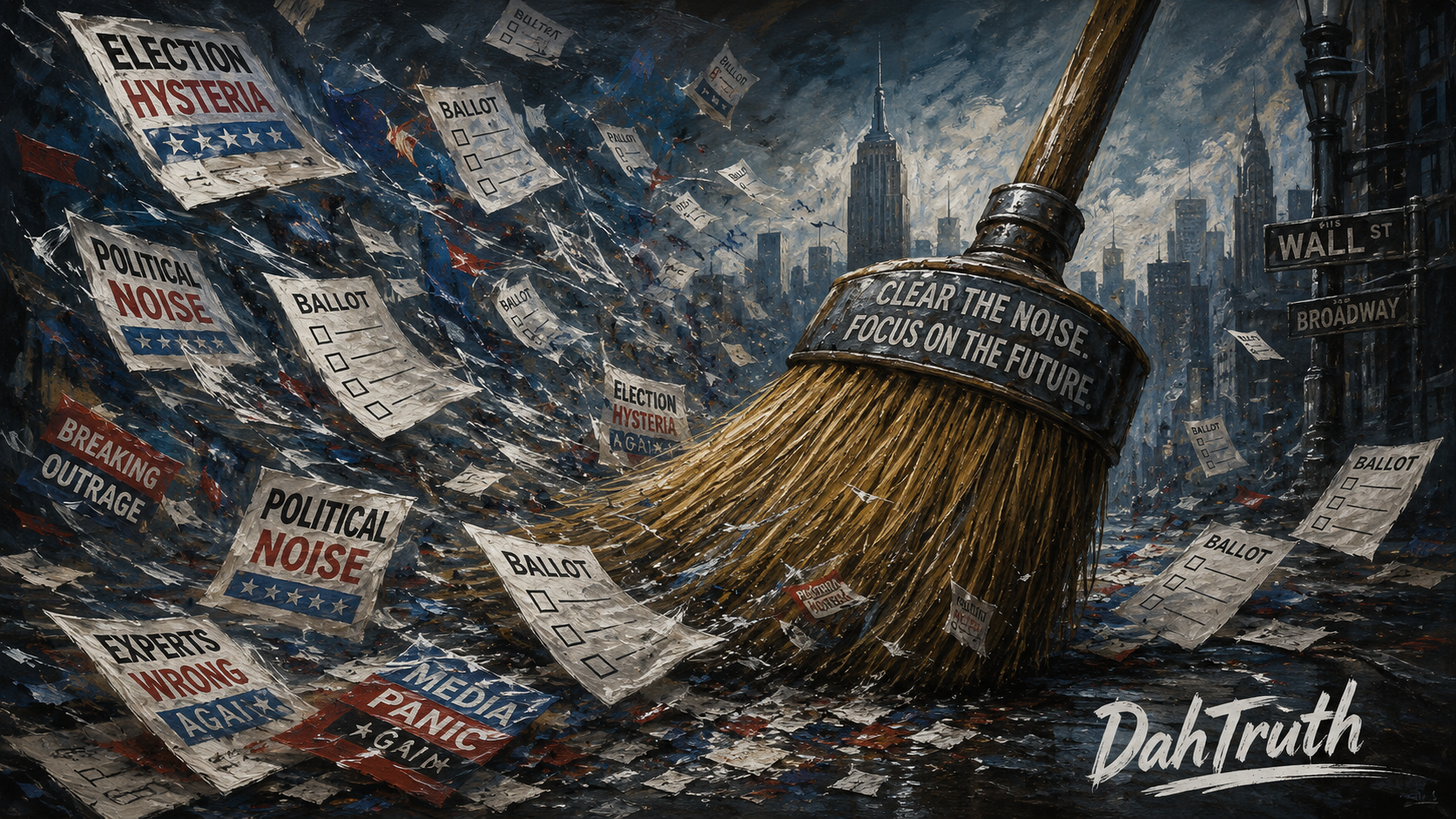
“By a faction, I understand a number of citizens, whether amounting to a majority or minority of the whole, who are united and actuated by some common impulse of passion, or of interest, adverse to the rights of other citizens, or to the permanent and aggregate interests of the community.”
— James Madison, Federalist No. 10
What the New York Primaries Actually Tell Us
Primary season is upon us, and June is one of the bigger months when it comes to primary elections. I would be remiss if I did not stop to discuss what happened in New York City last week. It has left the Democratic Party in shambles, and the division between the centrist wing and the left-leaning socialist wing is growing wider by the day.
The headlines wrote themselves. A socialist sweep. A political earthquake. A movement on the march. Three candidates endorsed by Mayor Zohran Mamdani won their Democratic primaries on the same night, two of them unseating sitting members of Congress, and the coverage treated it as the leading edge of a national wave. Yet when you look past the headline and into the body of the very same articles, a different and far less dramatic story is sitting there in plain sight. The socialist issue is not what it seems.
❦
Here is what actually happened. Brad Lander defeated Representative Dan Goldman in the 10th District. Claire Valdez won the open 7th District seat to replace the retiring Nydia Velazquez. Darializa Avila Chevalier narrowly unseated five-term incumbent Adriano Espaillat in the 13th District. Two of the three are members of the Democratic Socialists of America. The third, Lander, is not a DSA member at all, only a progressive who carried their endorsement. So even the number at the center of the story, three socialists, is loose before we begin.
All three districts are among the most Democratic in the nation. The 13th alone carries a Cook Partisan Voter Index of D plus 32, which makes it the eleventh most Democratic district in the entire country. These are not battlegrounds. They are fortresses. When a democratic socialist wins the eleventh bluest seat in America, that tells us about the seat far more than it tells us about the country. These victories happened precisely where the electorate was most primed to deliver them, and nowhere else.
❦
The deeper tell is in who actually cast the votes. In the 13th District, a June poll measured the race by race. Espaillat led among Black voters by fifteen points and among Latino voters by twelve. Chevalier led among white voters. The district she now represents stretches across Harlem and the Bronx and is majority Black and Latino, yet her strength was concentrated among the white, affluent, university-adjacent minority of that district. The neighborhood data tells the same story. The gentrified precincts around Columbia broke heavily for the Mamdani coalition, while the older Dominican and working-class corridors held for Espaillat. Chevalier carried Manhattan by several thousand votes and won the whole race by fewer than four points.
This is not a Republican talking point. It is an argument coming from inside the Democratic coalition. Black community leaders in Harlem described the movement as a gentrifying force. Espaillat himself charged that his opponent’s base was made up of transplant gentrifiers who drive up the rent. A Black empowerment fund spent heavily in the final week to reach Black voters with the warning. When the party’s own figures are making the gentrification argument, it deserves to be taken seriously rather than waved away.
Letitia James, the state attorney general who prosecuted Donald Trump, put it bluntly to CNN. She said the Mamdani-backed candidates do not understand the politics of New York City or the cultural differences from district to district, and that they have not been part of the history and the struggle of the very districts they will now represent. When the most prominent Black Democrat in the state describes the winners as strangers to their own districts, the claim that this was a working-class uprising collapses under its own weight.
❦
If you want proof that this was about a particular kind of district rather than a rising tide, look at the race the headlines skipped. In the South Bronx, Representative Ritchie Torres, an outspoken supporter of Israel and a candidate amply funded by AIPAC, faced a challenger who attacked him hard from the left on exactly the issues the movement claims are winning everywhere. Torres won by fifty points. Same city. Same week. Same set of issues. In the district that actually looks like the working-class, Black and Latino coalition the movement says it speaks for, the socialist lane did not just lose. It was buried.
Even Hakeem Jeffries, the House Democratic leader, explained the split this way. The socialist wins, he noted, came in the higher-income districts where wealthier voters took an outsized interest in Middle East policy. Where the district was working-class, the establishment held, and held overwhelmingly. Jeffries lost the marquee races he personally backed, Goldman and Espaillat both fell, and he is now downplaying the result. Yet his own explanation gives the game away. What looked like ideological momentum tracked the income map of the city almost precisely. The dividing line was demographics.
❦
This is where the media earned a share of the blame. The same outlets that led with earthquake and sweep buried, in their own reporting, the three facts that drain those words of meaning. These districts were always going to vote Democratic. The winners only carried the same neighborhoods Mamdani had already won a year earlier. The coalition was younger, whiter, more affluent, and more credentialed than the working class the movement invokes. One outlet watching the precinct data described the coalition as less blue-collar than boardroom-adjacent, young professionals with graduate degrees who arrived in Harlem after the rent went up. The headline wrote a wave. The body of the article wrote a puddle. The endorsement of one charismatic mayor made for a better story than the truth, which is that affluent enclaves voted the way affluent enclaves were always going to vote.
❦
The more revealing story arrived two days later, and it had nothing to do with ballots. It had to do with power, and what this movement does once it holds power. On the heels of the primary victories, the Rent Guidelines Board that Mamdani controls voted to freeze the rent on roughly one million rent-stabilized apartments, the first freeze on two-year leases in the board’s history. He had appointed six of its nine members. The vote was a foregone conclusion. The mayor called it a historic victory for working people, and the rooms full of advocates cheered. Yet here, too, the slogan and the substance do not match.
Consider who a universal, across-the-board freeze actually rewards. There are no income limits on who may live in a rent-stabilized apartment. It is common for comfortable, higher-income tenants to hold these units, a fact so well known that during the last mayoral race Andrew Cuomo called on Mamdani himself, then earning just under one hundred fifty thousand dollars, to give up his own rent-stabilized apartment so it could go to someone who needed it more. A freeze with no means test hands the same benefit to the struggling family and to the established professional who simply got lucky on a lease. The relief flows by address, not by need.
Now consider whom it leaves out. The poorest New Yorkers are not in this system at all. They are in public housing, in shelters, or in the unregulated market where the freeze does not reach. In the very week the freeze passed, tenants of a Mitchell-Lama property in the Bronx faced a rent increase of thirty-one percent. The freeze did nothing for them. It was never built to.
Worse still is what the freeze may do to the poorest tenants it claims to protect. A member of the Rent Guidelines Board, an economist who sits on the very panel that passed it, warned that the stabilized housing stock is not one thing but two. The newer and mixed buildings, where market-rate units cross-subsidize the regulated ones, absorb a freeze without much harm. The distress falls entirely on the older, pre-1974 buildings that are almost entirely stabilized, concentrated in the Bronx, Upper Manhattan, and central Brooklyn. There, costs keep climbing while revenue is frozen, and the only thing left to cut is maintenance, until the buildings decay toward vacancy and foreclosure. That is precisely where the poorest tenants live. The freeze comforts the secure tenant in a healthy building and quietly endangers the vulnerable tenant in a failing one.
❦
So this is the shape of the thing. A handful of victories in the safest, wealthiest, most credentialed corners of the bluest city in America, sold as a national working-class movement. A coalition that the party’s own leaders describe as affluent and disconnected, dressed as the voice of the poor. A signature policy that photographs as relief for working people while its benefits drift upward to the comfortable and its harms settle downward onto the very buildings the poor depend on.
I do not doubt the energy of this movement, nor its sincerity in its own mind. What I doubt is the story being told about it. The numbers describe a mirror held up to a few affluent neighborhoods and little more. The policy follows the same pattern. It carries the banner of the poor while serving, again and again, the comfortable class that actually turns out to vote for it.
The question every American Black community in this city should ask is simple. When the slogans fade and the cheering stops, who is left holding relief, and who is left holding the bill?
