This Is Not Selma
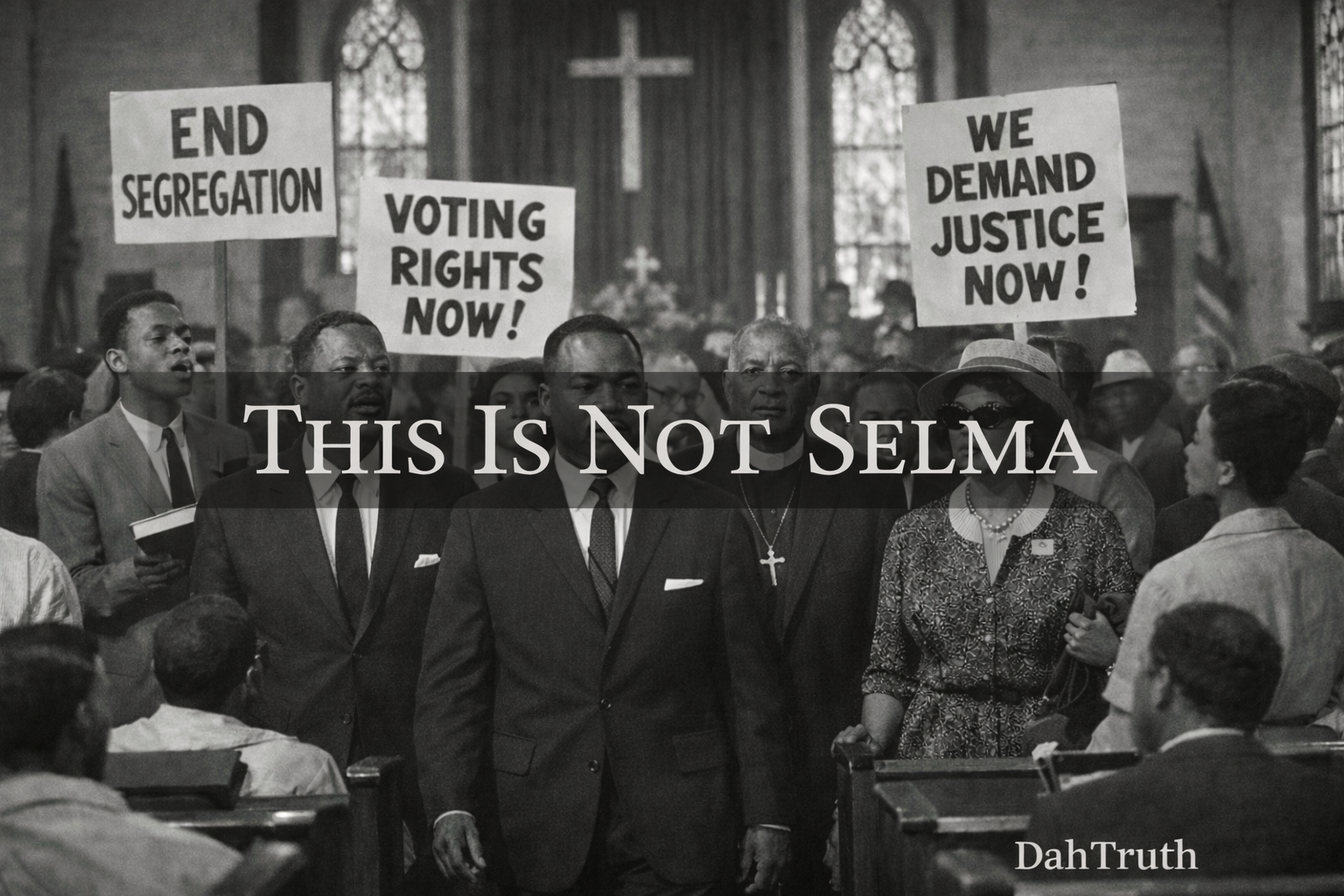
“The disfranchisement of the Negro is unjust to him, harmful to the white man, and a danger to the State. No man can be permanently wronged without the wrong reacting in some way upon himself.” — Booker T. Washington, circa 1900
The Exploitation of Black American History for a Different Fight
I am sick and tired of the lies being spread by many Democrats today, including American Blacks who claim to speak for our community but refuse to tell the honest truth. Lately, I have been reading Before the Mayflower, and the difference between that small book, which captures American Black history succinctly, and The 1619 Project by Nikole Hannah-Jones is immediately noticeable. Once you understand our history, the distortion becomes clear.
The distortion is nuanced. It is embedded in how the story is told. The 1619 Project presents history from a perspective that implies the racists of the Jim Crow South are somehow the same lineage or moral legacy as the Republicans of today. That implication is false. The historical record is clear: the violent suppression of Black Americans during Reconstruction and Jim Crow was carried out under a one-party Democratic system that controlled law enforcement, courts, and local government throughout the South. Hannah-Jones conflates history and omits this critical political context, and this approach is now used across modern media to twist the past into a narrative that does not align with the documented record.
The Minnesota Situation
This is why I decided to write this week's blog, prompted in part by the Don Lemon and Georgia Fort situation, which was quickly framed as a civil rights controversy. To me, it felt less like a genuine civil rights issue and more like a carefully constructed distraction from what is actually happening on the ground in Minnesota.
The protests themselves are not organic, and the viral clips circulating online are designed to be short, fast, and emotionally charged—just enough to rile people up around a distorted or incomplete story. This is exploitation in its purest form. The goal is not understanding, truth, or resolution, but agitation. Manufactured outrage keeps people distracted from the real issues affecting our communities.
Within a single week, the public was asked to absorb several emotionally charged events. Don Lemon was arrested after entering a church with protesters. Georgia Fort, an independent Minnesota journalist, was arrested in connection with the same incident. Around the same time, Representative Ilhan Omar claimed she was sprayed with apple cider vinegar during a public encounter. I watched the footage and reviewed her remarks without relying on outside commentary. Given the pattern of emotionally charged incidents emerging from Minnesota in rapid succession—each one perfectly calibrated to generate outrage against Republicans and immigration enforcement—skepticism is warranted. I am not claiming proof. I am noting a pattern that demands scrutiny rather than reflexive acceptance.
At the same time, a Native Land Podcast town hall was held in Minnesota, where speakers framed current immigration enforcement as morally comparable to the Civil Rights era.
That comparison is what I find most disturbing.
The Justice You Won't Hear About
We are programmed to hear stories of injustice in our communities. That is what drives engagement. That is what generates outrage. But last week, something else happened that received almost no attention: Sean Grayson, the former Illinois sheriff's deputy who shot and killed Sonya Massey in her home, was sentenced to 20 years in prison—the maximum sentence allowed under Illinois law.
When Sonya Massey was killed in July 2024, the story stoked the flames of racism and police brutality. She was a 36-year-old Black woman who called 911 to report a prowler. A white deputy shot her in the face in her own kitchen. The body camera footage was harrowing. Protests erupted. The case became national news.
And then? The system worked.
Grayson was fired, arrested, and charged. A jury convicted him of second-degree murder. A judge gave him the maximum sentence. The sheriff who hired him was forced to retire. Sangamon County agreed to implement more de-escalation training. Illinois changed its law to require fuller background checks on law enforcement candidates. And Sonya Massey's family—including her two teenage children—received a $10 million settlement, negotiated by civil rights attorney Ben Crump.
Justice was served.
But you don't hear much about that, do you? Because justice doesn't fit the narrative. The media wants to focus on injustice—on the outrage, the wound, the grievance. When the system actually holds a killer accountable, that story fades. It doesn't generate clicks. It doesn't keep people angry.
This is the difference between 1964 and today. In 1964, the men who murdered James Chaney, Andrew Goodman, and Michael Schwerner walked free for years. The state of Mississippi refused to prosecute. The system protected the killers. That was Jim Crow.
Today, a white deputy who killed a Black woman in her own home received the maximum sentence. Her children will receive restitution. Her name changed Illinois law. That is not Jim Crow. That is accountability. And pretending otherwise insults the people who actually lived—and died—under a system that offered no justice at all.
The False Equivalence
Black American history, particularly the Jim Crow and Civil Rights eras, is being used to make modern immigration enforcement feel morally equivalent to the violent suppression of Black Americans. The implication is that what happened to us is now happening to them. That comparison is emotionally powerful, but it is historically false.
The most glaring example is the repeated invocation of the 1964 murders in Mississippi, when James Chaney, Andrew Goodman, and Michael Schwerner were killed for helping Black American citizens register to vote. Those men were targeted because they were assisting citizens who were being denied a constitutional right by a one-party Democratic system.
What is happening in Minnesota does not align with that history. The killing of Alex Pretti, while tragic and rightly under investigation, occurred during a federal immigration enforcement operation. It was not a voter registration drive. Pretti was not targeted for advancing the civil rights of American citizens. These are fundamentally different legal and historical contexts, and collapsing them into a single narrative distorts both.
Civil rights were fought to secure citizenship and constitutional protection for Black Americans who were denied both by law. Using that history to guilt Americans into accepting disorder, selective enforcement narratives, or the erosion of the distinction between citizens and non-citizens does not advance justice. It distorts it.
The Church Incident and Due Process
Don Lemon and Georgia Fort were charged with conspiracy against rights of religious freedom and attempting to injure while exercising religious freedom. These are not charges against journalism. These are charges alleging that the civil rights of American citizens—the worshippers at Cities Church—were violated.
The protesters entered Cities Church in St. Paul to confront a man believed to be employed by ICE. That man is an American citizen, legally employed by the federal government, and legally entitled to worship without being confronted or harassed during a religious service. Whatever one thinks of ICE as an institution, entering a church to confront a private citizen during worship raises serious questions about the rights of worshippers and the limits of protest.
Yes, two judges initially rejected charges against Lemon, citing insufficient evidence of criminal behavior. But that does not establish innocence—it means the threshold was not met at that preliminary stage. What concerns me is what the footage shows: Lemon's presence with protesters before they entered the church, his coordination with them, the role he played in the lead-up to the disruption. Intent matters. The question is not whether Lemon held a camera, but whether he was a journalist documenting an event or a participant who used the journalist label as cover.
That is a question for the courts to decide. Lemon deserves due process, and he should have his day in court so that the facts can be examined and judged accordingly. But the rush to frame this as an attack on Black journalism—as though he was charged simply for being Black—obscures the actual legal question at issue.
Many Black journalists do not engage in this behavior. Black reporters across mainstream and independent media outlets manage to cover immigration and protest movements without entering churches or following protesters into worship services. Lemon and Fort's choices were their own, and they do not represent journalism as a whole or Black journalism specifically.
There is also an uncomfortable irony here. Historically, Black churches were surveilled, disrupted, and attacked by white mobs—often under Democratic control—seeking to prevent Black Americans from worshiping freely. In this case, protesters entered a predominantly white church to confront a worshipper over his employment. While the scale and violence are not comparable, the underlying logic is troubling: political intimidation was brought into a religious space, and the racial framing was later reversed to obscure that reality.
The Historical Lie
Left-leaning commentators increasingly frame these events as a struggle between Democrats and Republicans, or between whites and Blacks. That framing does not hold up under historical scrutiny. There are white Democrats and Black Americans who oppose current immigration policies. To maintain the narrative, the language expands to "Black and brown," folding immigrants into the Black American story despite vastly different histories, legal statuses, and relationships to the state.
This is not fundamentally about race. It is not fundamentally about party. It is about law.
Either we are a nation governed by laws, including borders, or we are not. To make federal enforcement appear inherently immoral, a familiar image must be resurrected. The violent white oppressor of Jim Crow memory carries emotional weight in Black communities, and that is precisely why it is invoked. Yet the historical oppressors people are being asked to imagine were not Republicans. They were Democrats operating within a one-party Southern system. By reviving that image and attaching it to modern immigration enforcement, commentators create a villain that does not exist in this context.
Civil Rights Funding vs. Modern Protest Funding
Some will point out that the Civil Rights Movement also had significant organizational funding and coordination. That is true. The NAACP received substantial donations. The Urban League was well-funded. CORE operated with donor support. Corporations like IBM, Coca-Cola, Ford, and General Motors contributed. Government funding supported the enforcement of the Civil Rights Act and Voting Rights Act.
But the existence of funding is not what distinguishes legitimate movements from manufactured ones. What matters is what the money was used for, who it served, and the legal context in which it operated.
Civil Rights–era funding supported the enforcement of existing constitutional rights. Money paid for court cases, attorneys, bail for unjust arrests, voter registration infrastructure, and protection against unconstitutional laws. The goal was access to the law, not pressure against it. These organizations supported American citizens who were denied the vote, denied equal protection, and denied access to public institutions. The Civil Rights Act of 1964 and Voting Rights Act of 1965 were responses to documented constitutional violations by state governments. That is why federal funding was justified—the federal government was enforcing its own Constitution against rogue states.
Most importantly, the Civil Rights Movement made specific, finite demands: end segregation, secure the vote, enforce equal protection. Once achieved, protests subsided because the legal objective was met. There was no demand to erase borders, suspend law enforcement, or collapse the distinction between citizen and non-citizen.
Modern protest funding operates under a fundamentally different logic. It often sustains continuous protest cycles, media amplification, legal defense for civil disobedience, and disruption as a permanent strategy. There is frequently no clear endpoint, because outrage itself becomes the product. Unlike the Civil Rights era, modern protest movements often treat law enforcement itself as illegitimate, blur the distinction between enforcement and abuse, and frame citizenship boundaries as immoral. This is a reversal of the Civil Rights framework, which demanded that the law finally apply to Black Americans.
Civil Rights funding fought for Black Americans inside the polity. Modern protest funding often advances causes involving non-citizens, transnational political goals, and ideological commitments unrelated to constitutional rights. That is not an extension of Civil Rights. It is a different project entirely.
Those perfectly crafted signs do not appear out of basements, bedrooms, or garages of the oppressed. They are printed, laminated, and carefully mounted on wooden sticks. That level of preparation suggests coordination. But coordination alone is not the issue—the Civil Rights Movement was coordinated too. The issue is what the coordination serves: finite goals for American citizens, or sustained agitation with no clear endpoint that conflates citizen and non-citizen interests.
This Is Not Selma
American Black media is feeding our community a lie: that illegal immigration enforcement is the same as Jim Crow oppression, that the Republicans of today are the Democrats of 1964, and that journalists who coordinate with protesters to disrupt church services are victims rather than participants who deserve their day in court.
The 1619 Project began this work of historical distortion by conflating timelines and omitting political context. Now that same approach is being used to exploit the Black American struggle for a completely different fight—one involving non-citizens whose relationship to the American legal system is fundamentally different from that of Black Americans who were born here, whose ancestors built this country, and who were denied rights they were owed under the Constitution.
Civil Rights–era funding enforced constitutional rights for American citizens who were denied them by law. Modern protest funding often supports sustained political agitation that challenges the legitimacy of law itself and blurs the distinction between citizens and non-citizens. Treating these two as morally or historically equivalent is not just inaccurate. It is an insult to the men and women who bled for our freedom.
When Sean Grayson received the maximum sentence for killing Sonya Massey, the silence from the same media that stoked outrage over her death was deafening. Because justice doesn't fit the narrative. Grievance does.
That is why this moment deserves scrutiny rather than slogans.
© 2026 Jacqueline Session Ausby. All rights reserved. This post and all original content published under DahTruth are the intellectual property of Jacqueline Session Ausby. No part of this publication may be reproduced, distributed, or transmitted in any form or by any means without the prior written permission of the author.
The Baby We Keep Being Asked to Surrender
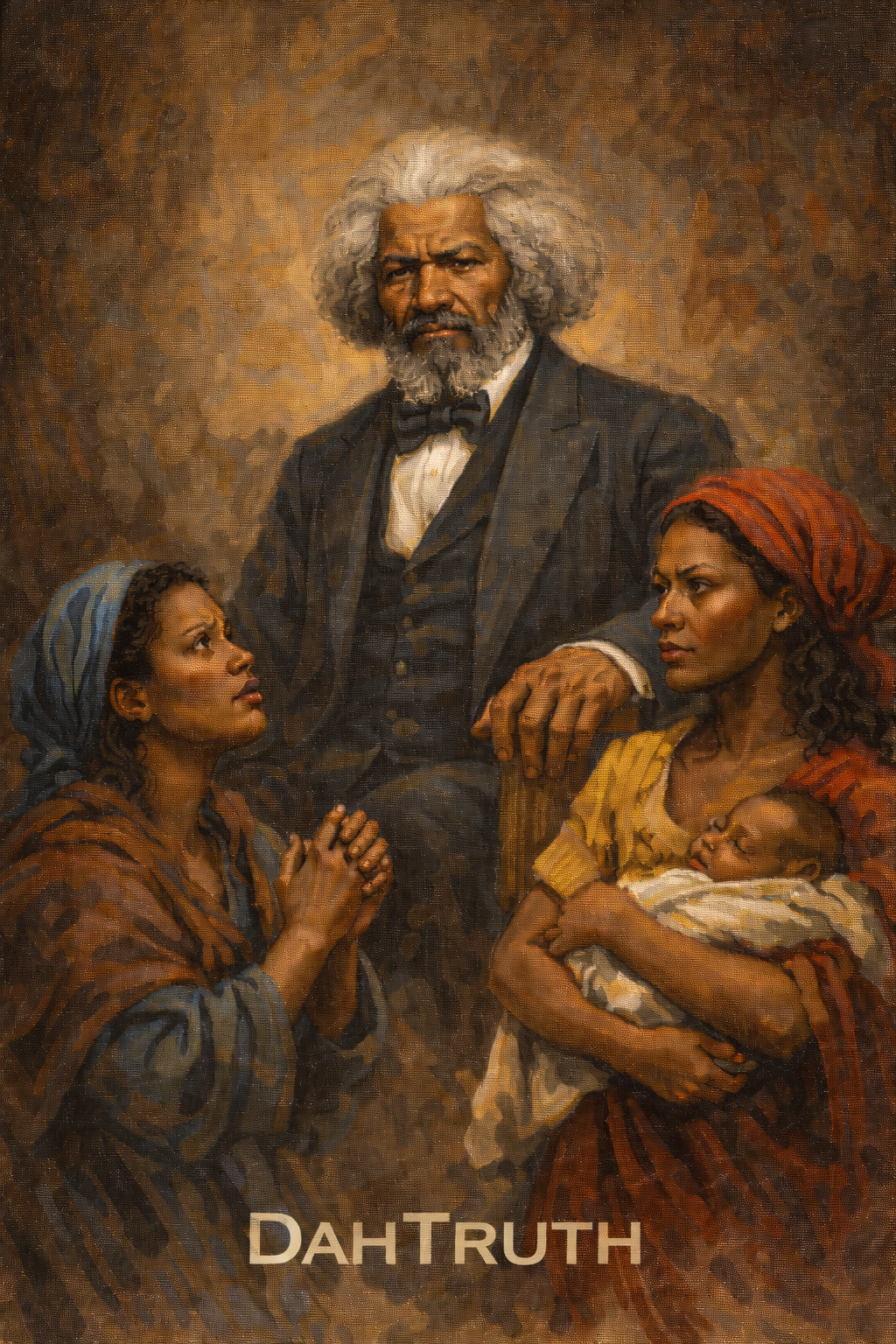
“Citizenship is not conferred by birth alone, but by fidelity to the principles of freedom and justice.” Frederick Douglass
There is a story in the Bible about Solomon, the son of David, who became king of Israel after David’s death. He was the son of Bathsheba. Two women once brought a baby before Solomon, each claiming to be the mother. One woman said the other had rolled over her child during the night, killed it, and secretly took the living baby. Solomon could not know the truth, so he proposed a test. “Let’s cut the baby in half.”
The true mother immediately cried out, “No. Give her the baby. Let her have it.”
Solomon knew then who the real mother was, because she was willing to sacrifice her own love in order to save the child.
I reference this story because it mirrors something Frederick Douglass experienced. After the Dred Scott decision, when the Supreme Court ruled that African Americans, descendants of enslaved Africans, could never be citizens, Douglass became disheartened. Black Americans had built the nation, fought in its wars, and sacrificed for it, yet were told they did not belong. He even considered leaving the United States, exploring places like Haiti as a potential homeland. In a sense, he was willing to give up the baby, to give up America, so that the people might survive.
Then came the firing on Fort Sumter and the beginning of the Civil War. At that moment, Douglass changed course. African Americans would fight for the nation they had built. They would defend it. They would claim it. They would not abandon the land their ancestors had watered with sweat, blood, and tears.
“When the righteous are in authority, the people rejoice: but when the wicked beareth rule, the people mourn.”
That choice, to stay, to fight, to build, defines our history.
When we think about the history of African Americans, the sacrifices are undeniable. We have given this nation blood, sweat, and tears. We have been enslaved, raped, lynched, murdered, incarcerated, discriminated against, and systematically excluded, yet we still love this land. We claim it as our own even when others insist we do not belong. Our roots are here. We have nowhere else to go.
And yet today, some try to tell us our story is the same as the immigrant story. It is not.
Frederick Douglass was willing to give up the baby rather than destroy what belonged to others. Today, what we see is different. Illegal immigrants, and in some cases legal immigrants, arrive with a philosophy that openly despises the West, refuses to assimilate, and disparages America’s institutions. They do not love this nation, yet we are constantly told to center their plight as if it mirrors ours.
Illegal immigrants step over those waiting in line for legal citizenship, enter communities already struggling, and draw heavily from housing, education, and healthcare, resources built through generations of Black labor and sacrifice. Some members of Congress even claim that immigrants built this nation, effectively erasing the foundational role of African American slaves.
The same pattern appears in the workforce. Immigrants are favored for certain jobs while Black men are incarcerated, overlooked, or displaced. In exchange for political power and votes, Black Americans are pushed aside, all while politicians demand the Black vote and act as if they are doing us a favor.
What is being presented as solidarity is, in reality, the erasure of Black Americans from their own history and struggle.
Now today, I am in Minnesota again. Another man, a white man, lost his life during a confrontation with ICE agents. From the videos available, it does not appear that he was reaching for a weapon. His hands were raised, as if to signal that he was not interested in violence. However, it appears he may have pushed one of the officers during the confrontation. That action escalated the situation, and tragically, he lost his life.
I feel genuine sorrow for this man. This did not have to happen.
I do not believe Border Patrol or ICE agents are without fault, and I am not convinced their response was appropriate. At the very least, these officers should be reprimanded. But I place much of the blame on those who continually stoke these flames, those who encourage confrontation without responsibility.
Protesters are increasingly putting themselves in volatile situations where they jeopardize their own lives. The state bears responsibility here as well. There should have been clear boundaries to ensure protesters did not impede officers or approach them in ways that invite escalation. Instead, disorder was allowed to grow unchecked.
Then there are the scams.
A Black family claimed they were returning from a basketball game with their children when ICE agents allegedly deployed gas beneath their car, causing the vehicle to fill with gas and nearly killing their infant child. The mother appeared on CNN and other platforms, describing how she promised her child that she would breathe for him to save his life. The family received nearly two hundred thousand dollars through GoFundMe.
It later emerged that this story was not true.
The parents were not coming from a basketball game. They were protesters who had taken their children to a protest rally. When things escalated and federal agents deployed gas, their vehicle happened to be in the path of that deployment. Videos later surfaced showing both parents actively participating in the protest. They had lied about their circumstances and used the situation to gain media attention and financial support.
Why would parents bring their children into a volatile protest environment? Why would they use their own children to draw sympathy and attention? It is sickening how people exploit situations for notoriety and money, even at the expense of their own children’s safety.
Another difference between today’s protesters and those of the civil rights era is that many of today’s protesters are paid. During the civil rights movement, protesters were not paid, and the causes were fundamentally different. We were defending the rights of American citizens who were being mistreated, oppressed, marginalized, and dehumanized.
Many African Americans were trying to escape the United States, fleeing slavery, violence, and Jim Crow, going to places like Canada. Immigrants today are coming here voluntarily. They want to be here. They want access to the system.
By the 1950s, under Jim Crow, Black Americans were trying to survive in a country filled with people angry about losing the Civil War and resentful of Black progress. On every side, we defended ourselves against violence and attacks. Many of those attacks came from white Democrats. Every major law passed in favor of African Americans was backed by Republicans, not Democrats.
Today, protesters aligned with Democrat policies attack ICE agents and federal officers while believing they are above the law. This is largely white on white protest activity. Black participation is minimal, with few exceptions. The contrast is stark. Black protesters face swift consequences, while some white protesters openly act out with little accountability, even inside churches, spreading hateful messages.
Another actor in all of this is the media. They sit back waiting for chaos, hungry for spectacle. Networks benefit from unrest because it produces content. Without chaos, what would they cover? Without the visceral hatred of Donald Trump, what would dominate their headlines? Disorder keeps the cameras rolling.
This week, I took my grandchildren to the National Museum of African American History and Culture in Washington, D.C. I wanted them to see where we started, from slavery to the Civil War, from secret churches to the Civil Rights Movement, from surviving drugs and violence meant to destroy our communities. I wanted them to understand that we are a strong, proud people who do not live off anyone. We work. We build. We survive. We thrive. We are Americans.
I wanted them to see how much we have given this nation and how our story is now being hidden, overtaken, and misused by people who do not love this country, do not know our history, and cannot speak for us. Resources flow to immigrant communities while our own struggle. Politicians posture while African American owned businesses receive little support. We see protests for illegal immigrants, even for people who have committed serious crimes, while the act of crossing the border illegally is reframed as not being criminal at all.
This framing distorts the truth and obscures history. American Blacks built this nation through sacrifice that cannot be equated or reassigned, and it is our responsibility to remember that legacy, preserve it, and teach it to the next generation.
© 2026 Jacqueline Session Ausby. All rights reserved. This post and all original content published under DahTruth are the intellectual property of Jacqueline Session Ausby. No part of this publication may be reproduced, distributed, or transmitted in any form or by any means without the prior written permission of the author.
Crossing the Red Sea: Why Black America Must Leave the Democratic Party (Copy)
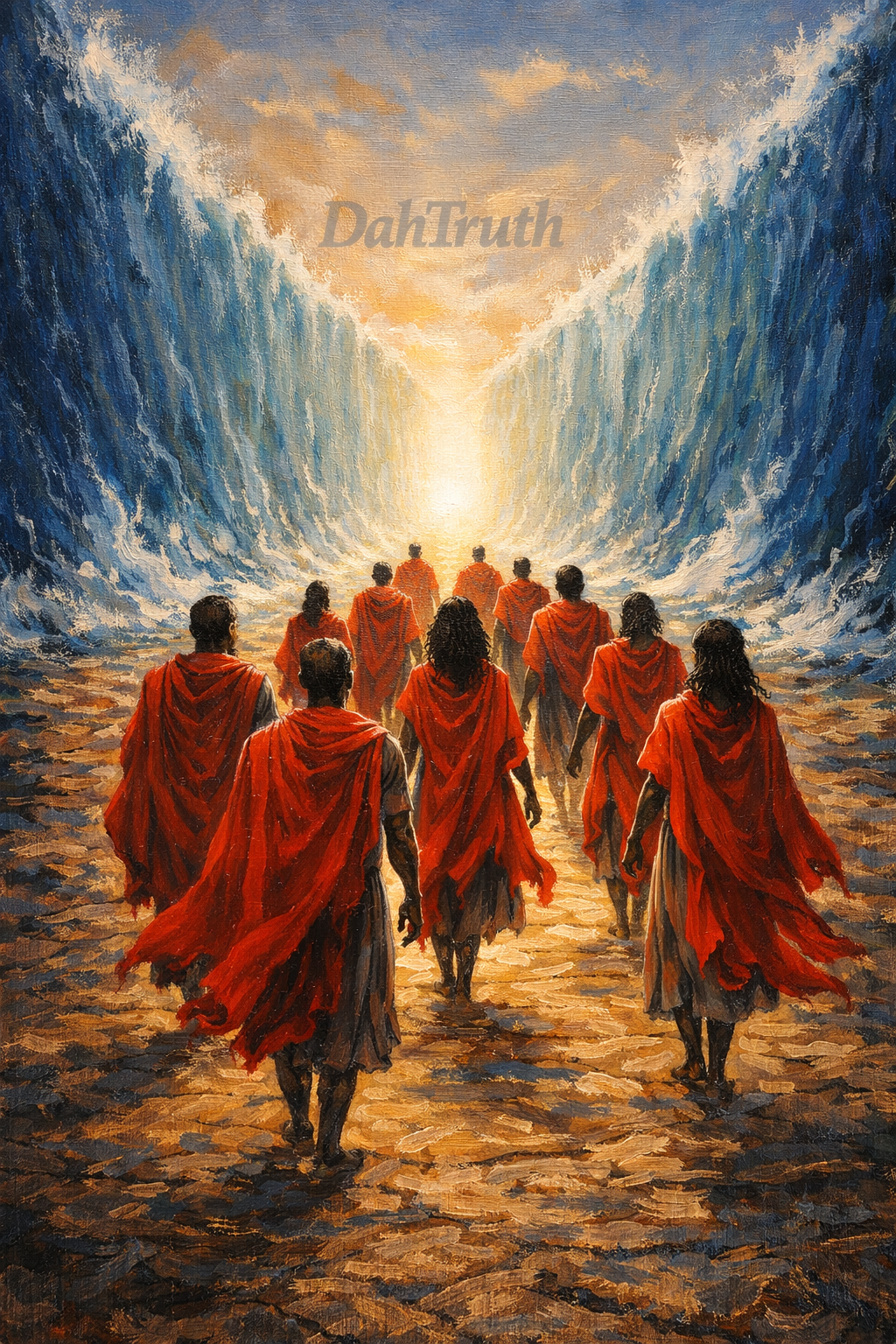
“And the Lord said unto Moses, Wherefore criest thou unto me? speak unto the children of Israel, that they go forward: But lift thou up thy rod, and stretch out thine hand over the sea, and divide it: and the children of Israel shall go on dry ground through the midst of the sea.” Exodus 14:15–16 (KJV)
This was a disturbing week of the year—and I don’t suppose that’s saying much, considering this is only the second week of the year. Still, I would be remiss if I didn’t point out the killing in Minnesota of a woman who, after being ordered to get out of her car, drove forward into an officer and was then shot and killed by that officer.
It is a tragic situation that a woman lost her life, but just as troubling is the fact that there are people who send others out to protest while offering no real protection, responsibility, or accountability when those situations turn deadly.
For weeks now, we have been witnessing rising protests against ICE agents in several Democratic-led states. In many of these protests, demonstrators have openly antagonized federal officers who are tasked with enforcing federal law. Somehow, illegal aliens appear to receive more sympathy and protection than the federal officers themselves.
“You can jail a revolutionary, but you can’t jail the revolution. You can kill a freedom fighter, but you can’t kill freedom.”
The officers have become the villains, while illegal aliens—regardless of their history or manner of entry—are defended by left-leaning Democrats. Civil-rights language is repeatedly used to suggest that what is happening today mirrors the civil-rights movement of the past. But this is not a civil-rights issue.
The reality is that these are individuals who crossed the border illegally, who did not build this country, who have no historical stake in this nation, and who have not contributed to it—yet they are making demands. Democrats argue as if these individuals are entitled to rights that belong to American citizens.
Even more troubling is the misuse of the ADOS story as justification. Our history is not the same. Our struggles are not interchangeable. They are not interconnected or entwined. The protests of today are nothing like the protests of the 1960s, which were largely peaceful. American Blacks did not spit on officers, hurl insults, impede their progress, disrupt communities, or place officers in situations where they were forced to defend themselves.
In fact, it was white mobs—often led or protected by Southern Democrats—who reacted violently to American Blacks for simply riding a bus, sitting at a lunch counter, walking down the street, or drinking from a water fountain. It is those who held that same ideology—who treated American Blacks as less than human and sought to keep them enslaved—who now claim moral authority while fighting to keep illegal aliens in this country to labor, serve tables, and fill roles they do not want for themselves.
More disturbingly, they now want American Blacks to join them in this effort.
That is one of the core issues: we are being asked to fight a cause for a group of individuals whose primary impact has been taking from our communities in the name of their own salvation. We are expected to move over and make room—for housing, healthcare, education, and jobs—while white employers hire them, pay them lower wages, and then force them to rely on social systems to sustain their lifestyles.
Meanwhile, Black men remain imprisoned, and Black women are still living in projects and Section 8 housing.
Individuals like Summer Lee, Jasmine Crockett, Ayanna Pressley, Roland Martin, Don Lemon, Abby Phillip, and Whoopi Goldberg guilt American Blacks into believing we are advancing a righteous cause—one that ultimately steps over our own community. Many within the Democratic Party listen to this rhetoric and calmly repeat the lie.
If there is one group whose best interests are not at heart in this movement, it is American Blacks.
We are also asked to follow Democratic leadership while individuals like Tim Walz and Jacob Frey send out dog whistles suggesting that what happened in Minnesota with this woman’s death is equivalent to what happened to George Floyd—and that we should respond in the same way. We are encouraged to riot, to burn, and to react, rather than to think critically.
At the same time, we are expected to forget about the fraud that has occurred in Minnesota—fraud involving resources intended for children, the elderly, and the disabled. While not every individual is responsible, the fraud happened, and it was exposed. It revealed another situation in which immigrants—some legal, others not—have come into this country and extracted resources from lower-class communities already struggling to survive.
We are asked to believe in the policies of an unknown leader—one who operates in the shadows and creates chaos from behind a curtain.
Meanwhile, those of us who support Donald Trump are ridiculed, labeled, and publicly shamed for that support. More importantly, we are expected to view everything Trump does as inherently wrong, without honest discussion or evaluation of outcomes.
I must address what Trump did regarding Maduro in Venezuela. We are expected to see these actions as un-American or as violations of international law, even though pressure on Venezuela was already in motion under the Biden administration. We are told to ignore the reality of what Venezuelan socialism has produced—and how it has driven millions from that nation into the United States.
There is little doubt that meaningful pressure on Venezuela could slow the flow of migrants from that region and disrupt drug-trafficking routes that use that country as a bridge into the United States. Yet we are instructed to believe that such actions somehow harm us.
Any policy—no matter how small—that could benefit our communities is rejected outright if it is associated with Trump. Results no longer matter. Outcomes no longer matter. If Trump is connected to the action, it is opposed on principle alone.
So the real question becomes: what is next, and what should be done?
I believe the answer is clear. There must be a mass exodus of Black Americans from the Democratic Party. We must remove ourselves from systems that hold us down, keep us dependent, or maintain us in a state of political bondage.
It is time to cross the Red Sea and never look back, lest we be lost to the rising waters of blue-state policies and special interests that threaten to drown our communities.
An Awakening of Allegiance: Fraud, Culture, and the Question of Who America Is
“One law shall be to him that is homeborn, and unto the stranger that sojourneth among you.” Exodus 12:49 (KJV)
We went to the moon. I believe we went to the moon. Fraud is fraud is fraud. And as we enter 2026, fraud (real, alleged, denied, and obscured) has become one of the defining issues dominating the national conversation.
Since just before Christmas, American media feeds have been saturated with allegations of widespread fraud tied to publicly funded programs. Much of this attention has been driven by Nick Shirley, a YouTube podcaster who traveled to Minnesota and publicly documented what he claims is systemic abuse of taxpayer-funded services within certain Somali American–run organizations.
Many Somali refugees arrived in the U.S. after the 1993 Battle of Mogadishu, when a failed U.S. mission and subsequent withdrawal left Somalia in prolonged instability, prompting large-scale displacement. They were afforded opportunity here, as they should have been. However, for years, allegations have persisted regarding fraud in sectors such as childcare services, transportation programs, and non-emergency healthcare, particularly programs intended to serve the elderly, the disabled, and autistic children. Past investigations have uncovered misconduct in some cases, yet critics argue that oversight failures remain unresolved.
What troubles many Americans is not simply the existence of allegations, but the perception that accountability has been uneven. Questions have been raised about political leadership in Minnesota and whether elected officials have sufficiently addressed these concerns. That unease intensified during the last presidential election cycle, when Minnesota's governor rose to national prominence as a vice-presidential running mate. The idea that unresolved questions surrounding the use of public funds could coexist with national political ambition unsettled many people.
Additional scrutiny has also been directed toward other prominent Minnesota political figures. The perception of corruption alone has deepened public distrust.
This forces a broader question: what has been the real impact of immigration policy in America, not in theory, but in practice? What does it mean for citizens who are expected to follow the rules while watching enforcement appear selective?
For me, this isn't abstract. It's personal. It's about what this country owes its people, particularly ADOS, and whether justice, accountability, and fairness still matter.
I hear what many Americans are feeling right now: fear, confusion, and a growing sense that national identity and civic norms are being challenged while ordinary citizens are told they are not allowed to question it. That is a legitimate civic concern, even when it is dismissed as something darker.
The Flag in Boston
What's happening right now is unsettling.
In Boston, one of the birthplaces of the American Revolution, there were reports of a Somali flag being raised in a public space where the American flag had traditionally flown. Whether symbolic or temporary, the image itself is jarring. Nations are built on shared symbols, and flags matter. They represent sovereignty, unity, and allegiance.
America understands the language of liberation. We fought a revolution to free ourselves from colonial rule. We recognize the right of peoples to self-determination. But that struggle happened here, on this land, under this Constitution. When a foreign national flag is elevated in an American city, it raises an unavoidable question: what exactly is being claimed?
Is it cultural pride? Political protest? Or something closer to territorial symbolism?
That uncertainty is what alarms people.
Criticism of these moments is often shut down immediately, labeled racist or xenophobic, rather than debated on civic grounds. Yet asking whether public institutions and public spaces should prioritize American national identity is not racism. It is a basic question of citizenship and allegiance.
The same dynamic appears in Minnesota. When outsiders raise questions about accountability, they are often dismissed rather than engaged on the merits of evidence. That response has only deepened mistrust.
What makes this moment volatile is the perception that standards are not applied equally. Americans are told that emphasizing national identity is dangerous, while expressions of foreign nationalism inside U.S. borders are defended as cultural expression. That contradiction fuels division.
This is not about denying anyone dignity or opportunity. Refugees came here fleeing instability, and America opened its doors. But citizenship is not only about what a country gives. It is also about loyalty, responsibility, and shared civic norms.
At what point does tolerance become the erosion of national cohesion?
And why are citizens made to feel un-American for defending American symbols, laws, and accountability?
The ADOS Perspective
This concern intersects with something deeper for me as an ADOS American.
I recently began reading about the Iran-Contra scandal and its downstream effects on Black communities, particularly in California. What struck me was not just the policy failure itself, but how deeply it shaped our lives without our understanding it at the time.
Growing up during the crack cocaine era, we were living inside a crisis engineered far beyond our neighborhoods. Looking back, I can't help but wonder how different our communities might be today if those drugs had not been allowed to flood them so deliberately.
Culture played a role in normalizing the damage. The music and movies many of us grew up on, particularly the rise of gangsta rap, did not merely reflect reality; they reinforced it. Decades later, the same themes persist. Violence, drug dealing, and criminality are still glorified, and young Black boys continue to absorb these messages as identity rather than warning. The YSL trial in Atlanta is a modern example of how culture, drugs, and real-world consequences collide, often devastatingly.
At the same time, other immigrant groups entered this country and, in many cases, leveraged Black American struggle, imagery, and history to advance socially and politically while foundational Black Americans remained marginalized. Our story is often used. Our needs are often ignored.
As 2026 begins, allegations of fraud involving publicly funded programs in immigrant-dense communities across multiple states have dominated headlines. These stories reinforce a perception among many ADOS Americans: accountability appears flexible when political power and voting blocs are involved.
There is a growing sense that Black Americans are treated as a guaranteed constituency, assumed loyalty with no obligation to deliver results, while newer communities are actively courted, protected, and symbolically elevated. That imbalance breeds resentment not because of race, but because of unequal political valuation.
For ADOS communities, this feels familiar. We endured generations of surveillance, over-policing, under-investment, and cultural degradation. Our institutions were dismantled. Our neighborhoods were flooded with drugs. Our families were destabilized, with little urgency for repair.
Against that backdrop, symbolic gestures like raising foreign flags in historic American cities feel less like inclusion and more like erasure. Not because immigrants should not express pride, but because foundational Black Americans rarely receive equal public recognition for our sacrifices.
Boston does not owe its existence to any single modern immigrant group. To suggest otherwise feeds the sense that ADOS contributions are being overwritten while we are told to remain silent.
The Awakening America Needs
America is not just an idea. It is a nation built through struggle, labor, conflict, and time. There are Americans, Black and White, whose lineage stretches back centuries on this soil. For ADOS Americans, that lineage begins in 1619 and runs through enslavement, segregation, and survival. For long-established White Americans, it runs through settlement, revolution, and nation-building. Different histories. Same land. Same inheritance.
History is tragic and final. Native Americans were displaced. Borders were drawn through power, as they have been everywhere on earth. No one alive today bears personal guilt for centuries-old events, but everyone alive today bears responsibility for the present.
Foundational Americans, ADOS and long-established White Americans, have more in common than they are encouraged to admit. They are divided while power quietly shifts away from both.
This awakening is not about hatred. It is about civic allegiance. American civic identity must come before foreign nationalism. Public institutions should reflect loyalty to America first.
But unity requires honesty.
White Americans must abandon racism, not symbolically, but genuinely. Racism corrodes trust and weakens the nation.
Black Americans must confront internal destruction. We cannot destroy our own communities, glorify dysfunction, and still expect power. Rights without responsibility produce dependence, not sovereignty.
Power comes from cohesion, ownership, discipline, and self-respect.
A nation that refuses to define itself will be defined by others.
A people that refuses to awaken will lose its future, not through invasion, but through neglect.
It is time to open our eyes.
It is time to wake up.